
The Neuromorphic Hypergraph: Emergent Brain-Like Architecture for Semantic Knowledge Graph Networks
A dynamic, in-memory hypergraph structure arising from the 1Schema protocol in decentralized systems.
Table of Contents
Abstract
The neuromorphic hypergraph represents a paradigm-shifting data architecture: a living, brain-emulating network of interconnected concepts that emerges organically from the accumulation of semantic transactions within a hybrid datachain through 1Schema protocol.
A datachain integrates a Layer 1 architecture that merges a peer-to-peer cash system with a peer-to-peer data system. The cash system facilitates the transfer of value, while the data system constructs a hypergraph of interconnected neurons, linked through relons, the entities that serve as semantic transforms. This design enhances both transactional efficiency and data interconnectedness within the network. The framework consists of atomic nodes, representing neurons, interconnected through multi-dimensional relational vectors, referred to as relons. This configuration creates a higher-order hypergraph that effectively models complex, contextual, and temporal knowledge, functioning as a dynamic knowledge graph with a level of unprecedented fidelity.
This architecture transcends conventional databases and simplistic graph structures by utilizing sparse, weighted connectivity to facilitate emergent behaviors such as adaptive inference, pattern recognition, and collaborative evolution. These characteristics echo the synaptic plasticity and ensemble dynamics observed in biological neural networks. The framework is enforced at the foundational protocol layer and incrementally developed through ANNODEs, which act as both consensus validators and mini web servers. As a result, it provides a scalable, query-native knowledge graph substrate that is particularly suited for decentralized intelligence where meaning is not statically stored but continuously woven through relational density.
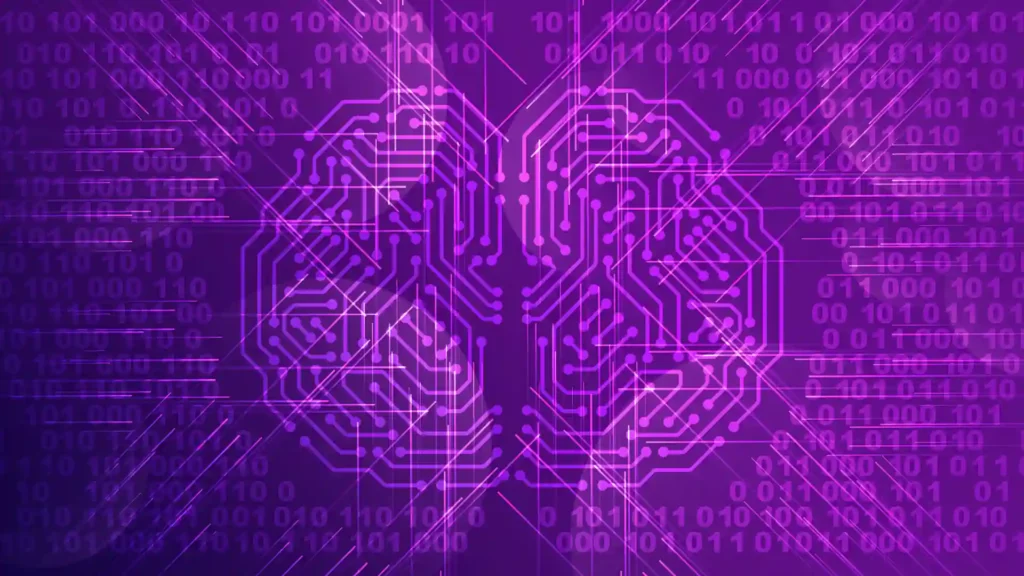
Neuromorhic Hypergraph
semantic, queryable, and fully interoperable data layer powered by 1Schema
Introduction
The rapid proliferation of decentralized systems highlights an urgent requirement for data architectures that can effectively represent intricate, contextual knowledge within a cohesive knowledge graph, all while ensuring scalability and economic viability. Conventional databases and graph models often struggle to accommodate the multi-relational, temporally dynamic characteristics of real-world information, necessitating the development of more robust solutions that can capture these complexities without compromising performance or cost-effectiveness.
This paper introduces the neuromorphic hypergraph, a novel data architecture that emerges from the 1Schema protocol within a hybrid datachain. By combining a peer-to-peer cash system with a peer-to-peer data system at Layer 1, the protocol enables the construction of a dynamic, in-memory knowledge graph composed of neuronal nodes (neurons) and semantic hyperedges (relons). This structure exhibits emergent properties analogous to biological neural networks, including adaptive inference and pattern recognition. The following sections detail the conceptual foundations, dynamic construction mechanisms, querying capabilities, and strategic advantages of this architecture, demonstrating its potential as a substrate for decentralized intelligence.
I. Conceptual Foundations: From Neurons to Networks
The neuromorphic hypergraph is founded upon a minimalist yet expressive model derived from neurobiological principles: knowledge is represented as a dynamic web of activations rather than static, isolated records. The system initializes in “INCEPTION” mode during which foundational neurons are created and interconnected via relons. Subsequently, every validated broadcast data transaction extends this structure, progressively enhancing its functionality, robustness, and connectivity.
Neurons function as immutable conceptual anchors – unique identifiers (NIDs) that gain substance through their participation in relations. A neuron “exists” and derives its semantics from the inbound and outbound relons that reference it, embodying the principle that identity emerges from context.
Relons function as directed, typed binary edges connecting two neurons (or a neuron to a literal). Each relon asserts a single relationship following the 1Schema format, enforced by Layer 1 protocol. Higher-order connectivity involving multiple nodes is achieved through clumps (TYPE_CLUMP = 6 transactions), which aggregate multiple relons into a single semantic circuit.
A clump can connect several neurons through coordinated relons, effectively functioning as a hyperedge-like structure composed of multiple binary edges. The full relon structure (TXID, FROM, TYPE, RELN, TO_TYPE, TO) is enforced by the protocol, ensuring that each assertion explicitly separates the relationship type (RELN) from its semantic dimension (TYPE). When a relon is referenced, a “firing fee” flows to sponsors, owners and administrators, creating ongoing incentives for those who build and maintain the hypergraph’s components.
I.I Hypergraph Topology: Beyond Graphs
Traditional graphs model binary relations. In the neuromorphic hypergraph, individual relons are directed, typed binary edges. Higher-order connectivity is achieved through clumps, which are collections of relons that together connect multiple nodes, effectively forming hyperedges.
- Directed and Typed: Relons impose directionality and dimension-specific semantics, enabling partitioned traversals. TYPE_BE relons form a DAG-like hierarchical structure, TYPE_HAS relons provide attribute information, and TYPE_AWARENESS relons capture feedback for contextualization and metrics.
- Multi-Edge Density: The R-factor – average number of relons per neuron – serves as a proxy for structural intelligence. As neurons are reused and re-referenced over time, the R-factor increases, correlating with richer inference potential as dense subgraphs reveal emergent patterns akin to cortical columns.
- Clump Abstractions: Complex phenomena are condensed into “clumps” – multi-relon circuits that aggregate relons into semantic units (e.g., an event as a bundled set of actor-action-time-place). These act as hyperedges within hyperedges, supporting recursive, hierarchical modeling.
This topology excels at capturing the non-pairwise realities of real-world knowledge: co-activations in events, overlapping ontologies, and contextual embeddings that simple edges cannot convey.
II. Dynamic Construction and In-Memory Realization
The hypergraph is not static but accretes transactionally. Each validated semantic broadcast appends a relon, updating the global structure atomically. Each ANNODE maintains a persistent store of all neurons and relons in a database, with optimized indices that enable fast traversal and pattern matching. Frequently accessed data may be cached in memory to achieve low-latency responses. Unlike traditional P2P cash systems that only track transaction inputs and outputs, an ANNODE exposes these query capabilities via an HTTP/HTTPS API, allowing applications to retrieve hypergraph data directly at layer one without third-party intermediaries.
When a new relon is confirmed, the ANNODE processes it through several stages:
- Ingestion: The relon is parsed and integrated into in-memory adjacency structures optimized for traversal. These structures index relons by key fields such as FROM_NID, BE, TYPE, RELN, and TO, enabling fast pattern matching without scanning the entire graph.
- Validation: Because Layer 1 consensus guarantees that all ingested relons satisfy 1Schema protocol requirements, the hypergraph can focus purely on structural integration: maintaining consistent indices, ensuring that from any neuron, both its outgoing and incoming relons can be traversed efficiently, and refreshing materialized views for query performance.
- Materialization: The hypergraph organizes its indices by semantic dimension. For each neuron, both its outgoing relons (those it points to) and incoming relons (those that point to it) are indexed separately per dimension. This organization allows any query to retrieve all relons of a specific type or matching a specific pattern instantly, without scanning.
Each relon carries a TYPE code that determines how it is applied within the hypergraph. The full spectrum of dimensions includes:
| Dimension | TYPE Code | Description |
|---|---|---|
| TYPE_SYS | 0 | System information for neuron metadata and commands. |
| TYPE_BE | 1 | Handles class-instance relationships and hierarchical “is-a” structures, forming a DAG-like hierarchy. |
| TYPE_PARAM | 2 | Defines class attributes and properties. Specifies what parameters a class of things can have. |
| TYPE_HAS | 3 | Provides the actual value for a parameter. Assigns attribute values to specific instances. |
| TYPE_AWARENESS | 4 | Captures subjective feedback, emotions, feelings, and opinions. Used for contextualization and metrics. |
| TYPE_EXPERIENCE | 5 | Documents temporal data and events in the experience memory space. |
| TYPE_CLUMP | 6 | Represents complex semantic structures that require more than the standard three pieces of information. Aggregates multiple relons into a single semantic circuit. |
| TYPE_SYS_MSG | 7 | Used for system-level communication and coordination messages. Not relevant to neuron definitions. |
| TYPE_BRAIN | 8 | For neural-net space wirings and inference rules. Encodes relationships for advanced operations. |
| TYPE_ROLE | 9 | Specifies semantic roles inside a clump, such as actor, theme, or instrument. |
| TYPE_METAN | 10 | Provides meta information about roles used within a clump. |
| TYPE_EPISODIC | 11 | Documents self-sensory and vitals data at runtime, stored in clump form. |
| TYPE_INTERNAL_PAY | 17 | Handles payments from keyless neurons. |
| TYPE_BROADCAST_PAY | 18 | Handles standard broadcast payments. |
| TYPE_BRAIN0 | 20 | Beginning of sequence for brain dimension operations. Values 20 and above indicate ordered sequences when multiple brain-dimension relons exist on a neuron. |
| TYPE_BRAIN120 | 120 | Stores trigger patterns and other important Layer 1 commands. |
| TYPE_BRAIN121 | 121 | Used for myelination measures and similar advanced wiring parameters. |
Values 100 and above are available for brain-dimension custom use. When multiple brain-dimension relons exist on a single neuron, their TYPE codes are assumed to imply order. The hypergraph applies each dimension differently during construction and traversal, enabling queries that can separate hierarchical relationships from attributes, feedback, or temporal data.
The system begins in “INCEPTION” mode, where foundational neurons are created and wired together with relons to bootstrap the base-level knowledge graph. From there, every broadcast transaction extends the structure. The neuromorphic hypergraph becomes more functional and more robust as it grows and hyper-connects. Over time, the R-factor (average connectivity per neuron) increases as neurons are reused and re-referenced, with higher relational density correlating to richer inference potential.
This architecture, combining persistent storage with efficient database indexing and optional in-memory caching, delivers fast response times for graph traversals, often approaching sub-millisecond performance for cached queries. The underlying neuron and relon store is fully replicated across all ANNODEs, meaning any node can independently construct the complete hypergraph from its local persistent data. As the network grows, additional ANNODEs increase data redundancy and eliminate single points of failure.
III. Querying, Inference, and Emergent Computation
ANNODE APIs expose the hypergraph’s query capabilities directly to applications, enabling discovery through conceptual proximity. These APIs enable pattern matching across dimensions, filtered graph traversals, and aggregation of clumps into higher-order structures. Because the knowledge graph is indexed by semantic dimension, it enables queries to target specific relationship types such as hierarchical links (BE), attribute assignments (HAS), or subjective feedback (AWARENESS), without traversing irrelevant edges.
This dimensional organization supports several classes of computation that can be implemented at the application layer, including:
- Semantic Search: Applications can retrieve neurons based on their position and relationships within the graph, not just string matches on names or identifiers. This enables discovery through conceptual proximity.
- Inference Pathways: The
BRAINdimension is reserved for encoding rules, logical relationships, and inference procedures as relons themselves. An application can traverse these pathways to derive new assertions from existing ones, effectively performing deductive or abductive reasoning within the hypergraph. Because the inference rules are stored as neurons and relons, the reasoning process is transparent and auditable. - Pattern Detection: As relons accumulate, the hypergraph develops structural regularities – clusters of densely interconnected neurons, temporal sequences in
EXPERIENCEdata, or sentiment distributions inAWARENESSrelons. These patterns are not computed by the protocol but can be discovered by external analytics tools or by AI agents that traverse the graph. The presence of such patterns reflects the semantic richness of the data and enables applications to surface insights, recommend connections, or detect anomalies.This phenomenon resonates with Hebbian learning in biological systems: neurons that are frequently referenced together become implicitly associated through the network’s growing relational density. While the hypergraph does not autonomously strengthen connections, the accumulated co‑occurrence of relons creates a statistical fabric that intelligent systems can exploit – much as the brain’s synaptic weights encode learned associations. The structure itself embodies the history of interactions, transforming raw data into a living knowledge graph, providing a substrate for associative memory and making the graph a powerful tool for context-sensitive retrieval.
- Inconsistency Illumination: Applications can query for contradictory assertions (e.g., two
HASrelons assigning different birth dates to the same person neuron) and flag these for human or automated resolution. The protocol guarantees that both assertions exist if validly broadcast; it does not resolve the contradiction, but the hypergraph’s structure makes such conflicts visible.
The R‑factor serves as a measurable indicator of graph density and semantic interconnectivity. As the knowledge graph grows and neurons are reused across contexts, the R‑factor increases, enhancing the potential for complex queries, richer inference, and more nuanced pattern discovery. Higher relational density provides a more fertile substrate for intelligent systems – whether they run externally or are themselves implemented as neurons and relons within the hypergraph. The intelligence does not reside in the protocol, but the protocol enables intelligence to be built in the same medium it seeks to understand, creating a seamless and evolvable cognitive architecture.
IV. The Hybrid Datachain Foundation
The neuromorphic hypergraph cannot be understood in isolation. It is the data-facing manifestation of a hybrid datachain architecture that combines two peer-to-peer systems at Layer 1:
- The P2P Cash System: Stored in a chain of blocks containing transactions, this provides the economic substrate – incentives for miners, sponsors, and contributors through firing fees, annex payments, and boosties mechanisms. It ensures that those who build and maintain the knowledge graph are compensated when their contributions are used.
- The P2P Data System: A persistent store of all neurons and relons, built incrementally from broadcast transactions and fully replicated across all ANNODEs. ANNODEs expose this data through query APIs, enabling client applications to retrieve relevant portions and construct application-specific knowledge graph representations in memory as needed.
These two systems are not separate but interwoven layers of the same datachain. The hypergraph emerges from the data system as an in-memory structure optimized for traversal and query, made accessible via ANNODE APIs. A single transaction carries both value and meaning, with the cash system fueling the data system’s growth and the data system giving the cash system something to reference and value.
This symbiotic relationship effectively positions the architecture as ideal for decentralized intelligence. The expansion of the knowledge graph is not a matter of random occurrence; rather, it is propelled by economic incentives. Each new relon serves dual functions: it signifies a semantic assertion while simultaneously representing an economic commitment.
V. Neuromorphic Inspirations: Bridging Biology and Computation
The neuromorphic hypergraph’s design draws inspiration from neuroscience, where brain function arises from sparse, recurrent connectivity in neural assemblies. Relons evoke synapses: directed, typed links whose context (encoded in the TYPE dimension) modulates interpretation. Dimensions parallel cortical layers – sensory (EXPERIENCE), associative (BE/PARAM), executive (AWARENESS) – suggesting a form of functional modularity. These are architectural inspirations aimed at emulating certain principles of biological neural networks, such as distributed representation, relational encoding, and hierarchical organization.
The hypergraph remains a deterministic data structure storing assertions validated by consensus. However, its design intentionally mirrors aspects of neural computation to facilitate the development of AI systems that can leverage its dense, relational fabric. By providing a native representation for concepts, relationships, and even inference rules (via the <code>BRAIN</code> dimension), the knowledge graph offers a substrate where machine intelligence can emerge through processes analogous to learning and reasoning – but those processes must be implemented, not assumed to arise spontaneously.
In computational terms, the concept aligns with sophisticated models of complex systems, particularly through the application of hypergraphs for multi-relational data representations in functional brain networks. Here, higher-order edges effectively represent synchronized activity across various neuronal regions. The hypergraph’s capacity to encode concepts through multiple overlapping relationships enables the resulting knowledge graph to remain robust against individual missing or erroneous connections, thereby preserving semantic integrity.
The architecture allows for the dynamic addition of new neurons and relational links at runtime without necessitating protocol modifications. Such flexibility facilitates the continuous integration of emerging concepts and relationships. Consequently, this approach serves as an ideal foundation for hybrid intelligence, where human-curated semantics coexist with machine-scale traversal capabilities.
VI. Strategic Advantages in Decentralized Ecosystems
Compared to monolithic knowledge bases or simple blockchain data storage, the neuromorphic hypergraph offers:
- Hyper-Scalability: Capacity grows with connectivity; R-factor optimization yields exponential query efficiency. More participants mean more relons, which mean higher density and richer inference potential.
- Interoperability: Universal primitives (neurons, relons, dimensions) ensure cross-domain fusion within a single, unified knowledge graph – scientific ontologies can interconnect with personal experiences, corporate data with public records, all within the same queryable structure.
- Privacy Sovereignty: Keyed neurons enable controlled access, while keyless neurons form the public commons. The hybrid model allows both private subgraphs and public collaboration within the same framework.
- Economic Sustainability: Whenever a relon references a neuron, a payment is automatically triggered to the neuron’s sponsor, enforced by the protocol. This mechanism establishes a sustained economic incentive for users to create high-quality concepts that others can reference and further develop. The expansion of the knowledge graph is thus fueled by this continuous feedback loop, rewarding contributors for their input and enhancing the overall quality of the network.
- AI/AGI Augmentation: The hypergraph’s inherent queryability based on dimension and relationship type allows AI and AGI systems to efficiently access the specific semantic context required for training or inference directly from the knowledge graph. The API facilitates seamless interaction with this structured knowledge, removing the necessity for feature extraction pipelines. Furthermore, the underlying data store is incrementally updated with each confirmed transaction, allowing applications to integrate new information continuously. This capability supports the development of agents that can adapt and evolve in tandem with the expanding knowledge framework.
In applications, it powers everything from real-time event reconstruction to decentralized retrieval-augmented generation systems, democratizing access to a “global brain” of verified, evolving knowledge where value flows continuously to those who contribute.
VII. Closing Remarks
The neuromorphic hypergraph emerges directly from the 1Schema protocol: a continuously growing lattice of meaning, a true living knowledge graph, where every new relon adds to the collective knowledge structure. By embedding economic incentives into the protocol, those who contribute are rewarded when their contributions are used, creating a self-sustaining ecosystem for shared knowledge. In an era of fragmented information and isolated datasets, this architecture offers a unified, participatory commons where human contribution and machine-scale querying converge, sustained by the very act of participation.
Browse ANNE Library

ANNE Forum: 1Schema & The Hypergraph
Join the conversation in the ANNE Protocol & Core Technology board to discuss the Neuromorphic Hypergraph and how semantic data structures emerge on the ANNE datachain.
Support
ANNE Media is a sovereign non-profit organization. All of our expenses are funded by user donations. If you appreciate our efforts toward a free and sovereign web, please consider supporting us.
Thank you kind sir or ma’am

84VrmTNQq4hbfBQce5LfUe8BHmBFSDKHHFcSws6FRa9oiDUQANBkRnKYChabe9HRYUVAu9tcojXNFJL484KQPdJFCxRecbP